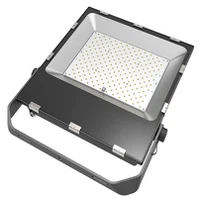
Detailed analysis of the technology used in LED panel lights
LED panel lights have many performance characteristics such as easy adjustment of the light size, very strong dimmable performance, vibration resistance, high luminous efficiency, small size and thinness, and energy saving, environmental protection, long service life, safety and reliability. Now we will Three technical details are analyzed from the technology used in LED panel lights:
First: the secondary optical design of the LED panel light system The main content of the optical system design is mainly composed of three aspects:
1. According to the requirements of lighting objects and luminous flux, determine the shape of the optical system, the number of LEDs and the size of the power;
2. Combine several LED light-emitting tubes into a "secondary light source" of a point light source, a ring light source or a surface light source, and calculate the lighting optical system according to the combined secondary light source;
3. The light distribution control of each LED tube on the "secondary light source" that constitutes the design of the lighting optical system is very important.
Second: Effectively improve the color rendering performance index of LED panel light lighting effect
At present, white light LEDs generally use blue light-emitting LEDs to superimpose yellow light-emitting yttrium aluminum garnet (YAG) phosphors excited by blue light to synthesize white light. The sensitivity of the human eye to chromatic aberration is much higher than that of light intensity. For lighting, the color rendering of the light source is often more important than the luminous efficiency. Therefore, adding an appropriate amount of red-emitting phosphor powder and maintaining a high luminous efficiency is an important issue in LED white light illumination.
Third: heat management of LED panel light system
Generally speaking, LED is a cold light source, because the light-emitting principle of LED is a technical process in which electrons directly emit photons through recombination without heating. However, due to the existence of Joule heat, LED also has heat when it emits light. LED is a temperature-sensitive device. When the temperature rises, its power drops sharply. Therefore, architecture description and heat dissipation technology development are also issues that need to be faced in the use of LED panel lights.
Because forced air cooling is generally not desirable in light sources, heat sinks and other methods of enhancing natural convection cooling are playing an increasingly important role in LED panel lighting and light source rendering as input electrical power increases. The lighting effects of high-quality LED panel lights produced by professional LED panel light manufacturers are easier to control, and the products are more frivolous and more reliable, so they have always been favored by consumers and carry forward important performance effects.